
About IB Arts
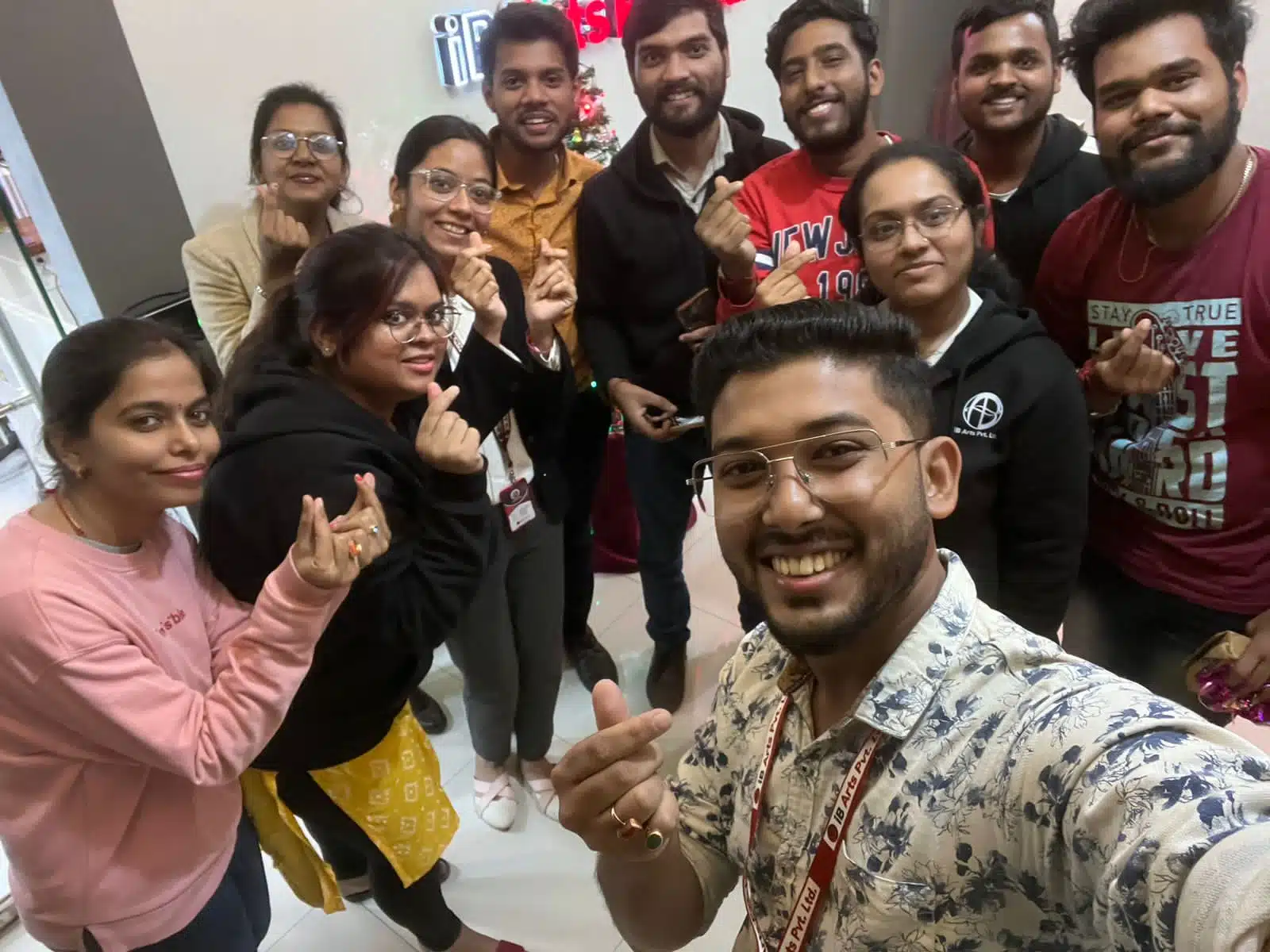
Sourav Karmakar and Chandan Prasad founded iB Arts with the goal of building a reliable digital and technology company from India for clients around the world.
What started as a small team has grown into a company working with businesses across India, Europe, and the US on web development, mobile apps, digital marketing, and AI solutions.
Over time, iB Arts became known for delivering quality work quickly and reliably for both startups and global brands.
The Problem
As iB Arts expanded its international business, cross-border payments became a critical part of daily operations. The company handles transactions worth hundreds of thousands of dollars every year, with most payments routed through traditional banking channels. While the system works, it created several operational and financial challenges over time.
Conversation Windows that dictated the clock
Foreign currency received through a traditional bank can only be converted during specific windows, typically tied to Indian banking hours and how partner banks process transactions. For a company receiving payments from clients in the US, UK, or Europe, this means forex decisions are made not when the market is most favourable, but when the bank allows it. Those are two very different things.
No Visibility Across International Payments
Managing international payments across multiple clients and geographies without a unified view is an operational blind spot. iB Arts had no single dashboard where they could see incoming funds by currency, client, or region. Getting a clear picture meant piecing together information from multiple sources like bank statements, payment notifications, and internal records.
Fees That Quietly Ate Into Every Transfer
Traditional banks apply a spread over the interbank exchange rate on international payments, typically in the range of 2 to 4%. There are also fixed fees and charges from other banks involved in the transfer that vary by transaction. None of these are clearly shown upfront. They simply show up as a difference between what a client pays and what actually lands in your account.
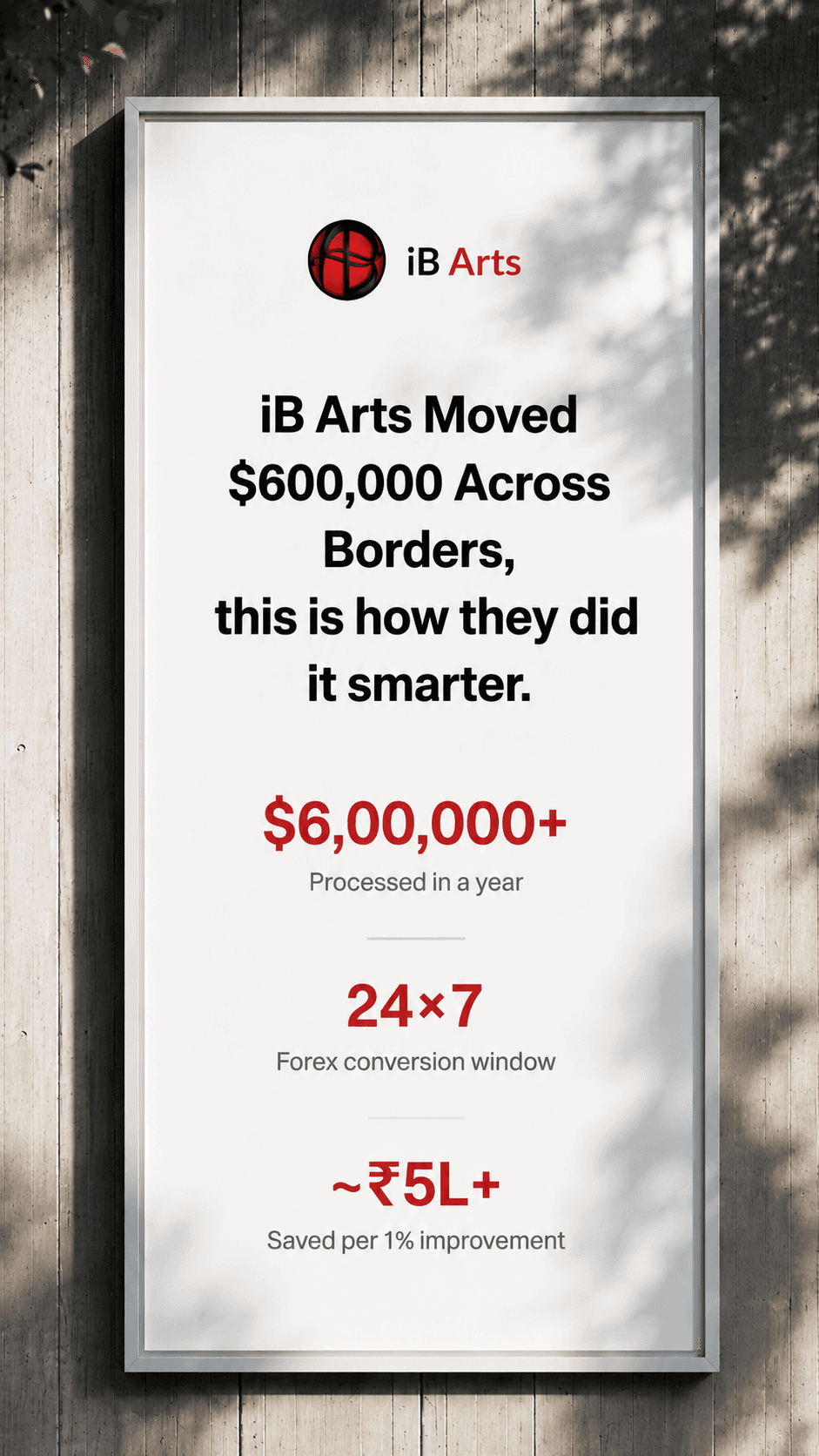
At $600,000+ in annual international transactions, the numbers here are simple and striking. Even a 1% difference in effective rate or fees translates to over ₹5,00,000 lost every year. At 2 to 3%, that number climbs significantly, and it recurs every single year.
At the scale we operate, even small inefficiencies in international payments add up to real money. We needed a solution that gave us both cost savings and the control to make smarter financial decisions.
“
“
The switch to Infinity
Forex Conversion 24/7
With Infinity, iB Arts can convert funds at any time. Not just during banking hours, and not within a rigid conversion window. When a favourable rate appears in the market, they can act on it. When a client payment lands at midnight, they're not waiting until the next business day to convert.
A single platform for everything
Infinity brings all of iB Arts' international payment activity into one dashboard. Incoming payments, conversion rates, transaction history, settlement status, all visible in one place, in real time. The hours the finance team previously spent manually piecing together records and reconciling accounts are effectively gone.
Meaningful Savings on Fees
Infinity settles at rates significantly better than traditional banking channels. The markup that Indian banks quietly apply on international payments, transaction after transaction, is no longer part of the equation. What iB Arts' clients send is effectively what iB Arts receives, without the silent cuts that had previously just been accepted as the cost of doing business internationally.
Real-Time Financial Decision-Making
Perhaps the most meaningful change is one that doesn't show up in a single line item: iB Arts now makes financial decisions on their own terms, not around a bank's schedule. When market conditions are favourable, they act. When they need to assess their international revenue position, the information is there instantly. When a client payment arrives, they can respond in real time.

About IB Arts
Sourav Karmakar and Chandan Prasad founded iB Arts with the goal of building a reliable digital and technology company from India for clients around the world.
What started as a small team has grown into a company working with businesses across India, Europe, and the US on web development, mobile apps, digital marketing, and AI solutions.
Over time, iB Arts became known for delivering quality work quickly and reliably for both startups and global brands.
The Problem
As iB Arts expanded its international business, cross-border payments became a critical part of daily operations. The company handles transactions worth hundreds of thousands of dollars every year, with most payments routed through traditional banking channels. While the system works, it created several operational and financial challenges over time.
Conversation Windows that dictated the clock
Foreign currency received through a traditional bank can only be converted during specific windows, typically tied to Indian banking hours and how partner banks process transactions. For a company receiving payments from clients in the US, UK, or Europe, this means forex decisions are made not when the market is most favourable, but when the bank allows it. Those are two very different things.
No Visibility Across International Payments
Managing international payments across multiple clients and geographies without a unified view is an operational blind spot. iB Arts had no single dashboard where they could see incoming funds by currency, client, or region. Getting a clear picture meant piecing together information from multiple sources like bank statements, payment notifications, and internal records.
Fees That Quietly Ate Into Every Transfer
Traditional banks apply a spread over the interbank exchange rate on international payments, typically in the range of 2 to 4%. There are also fixed fees and charges from other banks involved in the transfer that vary by transaction. None of these are clearly shown upfront. They simply show up as a difference between what a client pays and what actually lands in your account.
At $600,000+ in annual international transactions, the numbers here are simple and striking. Even a 1% difference in effective rate or fees translates to over ₹5,00,000 lost every year. At 2 to 3%, that number climbs significantly, and it recurs every single year.
At the scale we operate, even small inefficiencies in international payments add up to real money. We needed a solution that gave us both cost savings and the control to make smarter financial decisions.
“
“
The switch to Infinity
Forex Conversion 24/7
With Infinity, iB Arts can convert funds at any time. Not just during banking hours, and not within a rigid conversion window. When a favourable rate appears in the market, they can act on it. When a client payment lands at midnight, they're not waiting until the next business day to convert.
A single platform for everything
Infinity brings all of iB Arts' international payment activity into one dashboard. Incoming payments, conversion rates, transaction history, settlement status, all visible in one place, in real time. The hours the finance team previously spent manually piecing together records and reconciling accounts are effectively gone.
Meaningful Savings on Fees
Infinity settles at rates significantly better than traditional banking channels. The markup that Indian banks quietly apply on international payments, transaction after transaction, is no longer part of the equation. What iB Arts' clients send is effectively what iB Arts receives, without the silent cuts that had previously just been accepted as the cost of doing business internationally.
Real-Time Financial Decision-Making
Perhaps the most meaningful change is one that doesn't show up in a single line item: iB Arts now makes financial decisions on their own terms, not around a bank's schedule. When market conditions are favourable, they act. When they need to assess their international revenue position, the information is there instantly. When a client payment arrives, they can respond in real time.