

Discover infinity


Subscribe to our newsletter
Get the latest updates, insights, and tips delivered straight to your inbox.
A few months ago, a friend who runs a small design agency in Pune called me. One of her clients from Germany had wired her money, which didn't show up in her bank account. Her bank requested an FIRC, which she didn't know how to request, and Razorpay’s support was polite but slow.
Nothing was broken or wrong here; it is just that this payment platform was not built for the problem that she had.
This is where the Razorpay alternatives search starts. This is not because Razorpay is bad; it is just because it is not built to solve every problem. Some businesses are chasing lower international payment costs.
Some need fast and better onboarding, and others need better documentation support for exports.
This blog compares domestic and international payment alternatives to Razorpay. The best alternative depends on what you're trying to replace, not just on which brand looks cheaper on a landing page.
TL;DR: Best Razorpay Alternatives By Use Case
Tool | Best For |
Freelancers, agencies, exporters, and SaaS businesses receiving international payments | |
Skydo | Exporters and freelancers who want a simple, India-focused international collections tool |
Xflow | Businesses that need global collection accounts alongside export-payment support |
Karbon | Businesses that want international payments bundled with broader finance workflows |
PayPal | Freelancers who need instant client trust and easy global acceptance |
Stripe | SaaS and subscription businesses with a global customer base |
Wise | Freelancers and marketplace sellers who need low-cost payouts, not a full checkout |
Cashfree Payments | Indian businesses that want a modern, developer-friendly domestic gateway |
PayU | Established e-commerce and enterprise businesses needing a mature domestic stack |
CCAvenue | Traditional businesses that want broad payment method coverage |
PhonePe Payment Gateway | UPI-heavy checkout for consumer-facing Indian businesses |
Paytm Payment Gateway | Businesses leaning on Paytm's existing consumer base |
Easebuzz | SMEs, education platforms, and simple collection workflows |
Why do businesses look for a Razorpay alternative?
There are a few recurring pain points that push Indian businesses and freelancers to actively compare the alternatives. These are as follows:
1) International payment cost or FX markup concerns.
Businesses that regularly receive international payments realise that the cost of receiving international payments is usually higher than expected. This includes transaction fees, FX markup and conversion charges.
This is especially noticeable for freelancers and agencies billing in USD, GBP, or EUR, where even a small percentage difference adds up over dozens of invoices a year.
2) Need for smoother FIRA/FIRC/export documentation.
Exporters of services need Foreign Inward Remittance Certificates for GST and income tax purposes. Businesses that export services often prioritise platforms where documentation is fast, free, and doesn't require repeated follow-up.
3) Onboarding, KYC, or activation delays.
New businesses, especially smaller agencies, freelancers, or first-time exporters, sometimes face longer-than-expected onboarding or KYC review timelines. This timeline matters a lot, especially when the cash flow situation is tight.
4) Support experience and account risk concerns.
Businesses become more sensitive to handling disputes and responding quickly, as the platform’s transaction volume grows. A single delay in settlement can be disruptive for a business running on thin working capital.
5) Settlement timing, dispute handling, chargebacks, or holds.
Some businesses simply want more predictability. It is important for them to know when their funds will be settled, or under what conditions a payment might be put on hold, etc.
13 Best Razorpay Alternatives in India (Detailed Comparison)
Alternative | Best For | Domestic Payments | International Payments | Key Strength | Possible Drawback | Ideal User |
Cross-border collections | Not the core focus | Yes | Flat, transparent pricing and free FIRA | Not built as a full domestic checkout gateway | Freelancers, agencies, SaaS, exporters | |
Skydo | Export payments | Not the core focus | Yes | Simple, exporter-first experience | Narrower feature set than full gateways | Exporters and freelancers |
Xflow | Global collections | Limited | Yes | Dedicated receiving accounts | Newer platform, verify support depth | Exporters, agencies |
Karbon | Finance + payments | Limited | Yes | Bundles payments with finance tools | May be more than a solo freelancer needs | Growing businesses wanting finance workflows |
PayPal | Client trust | Limited | Yes | Instant global recognition | Higher fees and FX cost | Freelancers with international clients |
Stripe | SaaS subscriptions | Available, verify current India terms | Yes | Strong developer tools, subscriptions | India onboarding can vary by merchant type | Subscription and SaaS businesses |
Wise | Low-cost payouts | Not a checkout gateway | Yes | Low, transparent FX margins | Not a replacement for a full gateway | Freelancers, marketplace payouts |
Cashfree Payments | Domestic gateway | Yes | Limited | Developer-friendly, strong UPI support | Fewer export-specific tools | Indian e-commerce, D2C, SaaS |
PayU | Enterprise checkout | Yes | Limited | Mature, established infrastructure | Can feel heavier for small businesses | Established e-commerce, enterprise |
CCAvenue | Broad method support | Yes | Limited | Wide range of payment methods | Interface feels dated to some users | Traditional businesses |
PhonePe Payment Gateway | UPI checkout | Yes | No | Deep UPI integration, consumer trust | Less suited to global collections | Consumer-facing Indian businesses |
Paytm Payment Gateway | Paytm ecosystem | Yes | No | Familiarity with Paytm user base | Ecosystem-specific advantage only | Businesses with Paytm-heavy audiences |
Easebuzz | SME collections | Yes | No | Simple setup for SMEs, education | Limited enterprise-scale features | SMEs, schools, small collection workflows |

Razorpay Alternatives for International Payments
1. Infinity

Best For: Freelancers, agencies, exporters, and SaaS businesses receiving international payments
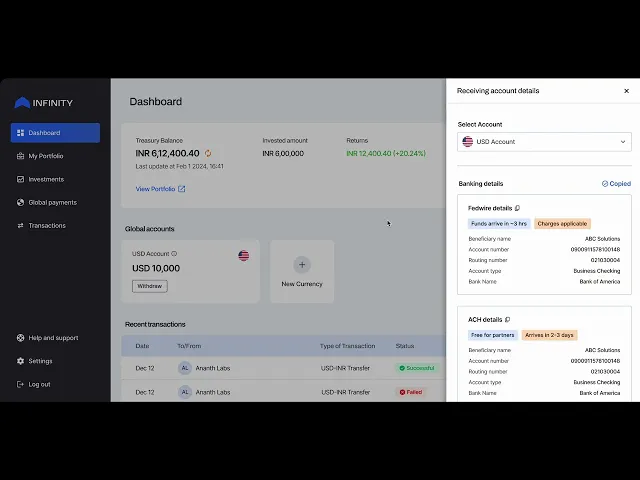
What it is: Infinity is built specifically for Indian freelancers, agencies, and exporters who get paid by clients abroad, along with SaaS businesses billing international customers.
The core pitch is FX transparency: a flat, all-inclusive fee structure instead of a mix of conversion fees, platform fees, and hidden markups stacked on top of each other. It also provides free FIRA, which matters directly for GST and income tax filing, and is positioned around settlement predictability rather than variable timelines.
Fees
0.5% Flat, all-inclusive pricing model with no separate FX markup layered on top.
Razorpay vs Infinity
Razorpay is built primarily around domestic checkout, with international payments as an add-on feature. Infinity is built the other way round; cross-border collections are the core product, not an afterthought.
Factor | Razorpay | Infinity |
Core focus | Domestic checkout, with international payments as an add-on | International collections built as the core product |
Fees | Standard gateway fee, plus separate FX markup on international payments (verify current rate) | Flat, all-inclusive fee, no separate FX markup layered on top (verify current rate) |
International payments | Available as a feature | Purpose-built |
FX transparency | Standard gateway conversion | Flat, all-inclusive pricing |
Export documentation (FIRA/FIRC) | Available, standard process | Free FIRA, positioned around speed |
Best suited for | Domestic-first businesses | Freelancers, agencies, exporters, SaaS billing internationally |
Summary
Infinity is a strong fit if your main problem is receiving international payments predictably and getting export paperwork sorted quickly. Infinity is not the right choice if you need a full domestic UPI or card checkout gateway.
2. Skydo
Best For: Exporters and freelancers who want a simple, India-focused international collections tool
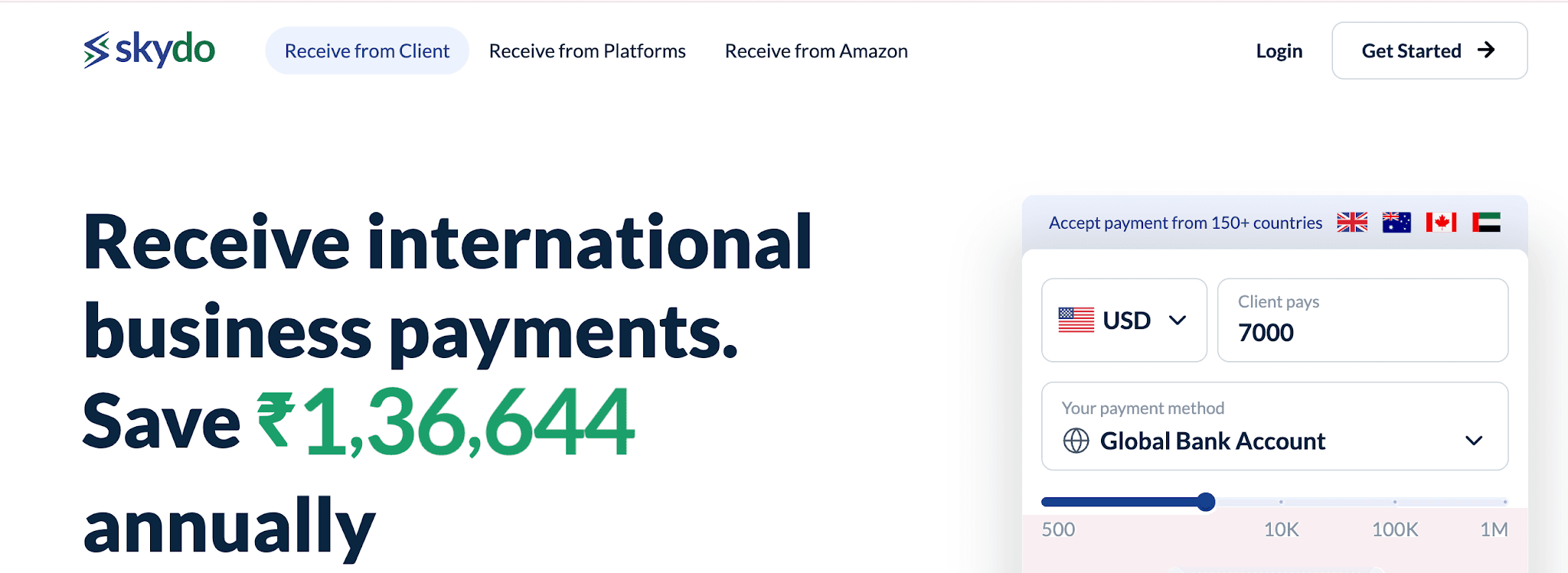
What it is: Skydo is positioned around a straightforward promise for exporters and freelancers: receive international payments without the paperwork and margin confusion that traditional banking channels involve. The experience is built to feel simple, which appeals to freelancers who don't want to manage multiple dashboards or chase documentation manually.
Fees
Flat or percentage-based pricing depending on plan.
Pricing Tiers
Invoice Amount | Skydo Fee |
Up to $2,000 | $19 flat + 18% GST |
$2,001 – $10,000 | $29 flat + 18% GST |
Above $10,000 | 0.3% of the amount + 18% GST |
Razorpay vs Skydo
Razorpay's international payments sit alongside a much broader domestic product. Skydo is narrower by design, focused solely on cross-border collections for exporters.
Factor | Razorpay | Skydo |
Core focus | Broad domestic + international product | Exporter-focused international collections only |
Fees | Standard gateway fee, plus separate FX markup on international payments (verify current rate) | Flat or percentage-based pricing depending on plan (verify current rate) |
Feature breadth | Wide, covers many use cases | Intentionally narrow |
Onboarding experience | Standard gateway onboarding | Built to feel simple for exporters/freelancers |
Documentation support | Standard process | Positioned around reducing paperwork friction |
Best suited for | Businesses needing a full product suite | Exporters and freelancers wanting simplicity |
Summary
Skydo is good for exporters and freelancers who want simplicity over feature breadth. Businesses needing broader payment orchestration or domestic checkout will need a separate solution alongside it.
3. Xflow

Best For: Businesses that need global collection accounts alongside export-payment support
What it is: Xflow focuses on global collection accounts, giving Indian businesses a way to receive international payments into dedicated accounts rather than relying solely on traditional wire transfers. This is useful for exporters and agencies that want a cleaner separation between international and domestic revenue streams.
Fees
Percentage-based, varies by transaction type. Xflow uses flat-fee tiers for incoming payments. Its pricing starts at around $12 for invoices up to $2,000 and $20 for invoices up to $5,000, while positioning the service as having zero FX markup.
Razorpay vs Xflow
Razorpay doesn't offer dedicated global collection accounts in the way Xflow does; its international payments run through a more generalised gateway flow.
Factor | Razorpay | Xflow |
Core focus | General payment gateway | Dedicated global collection accounts |
Fees | Standard gateway fee, plus separate FX markup on international payments (verify current rate) | Percentage-based, varies by transaction type (verify current rate) |
Account structure | Single merged account flow | Separate accounts for international revenue |
Market maturity | Well-established | Comparatively newer entrant |
Documentation & support | Established processes | Worth verifying turnaround directly |
Best suited for | Businesses wanting one unified gateway | Exporters/agencies wanting revenue separation |
Summary
Worth considering for exporters and agencies wanting a dedicated collections setup. As a comparatively newer entrant, it's worth verifying current support responsiveness and documentation turnaround directly before committing significant volume.
4. Karboncard

Best For: Businesses that want international payments bundled with broader finance workflows
What it is: Karbon bundles international payment collection with broader business finance workflows, which can appeal to growing businesses that want more than just a payments tool, think expense management or finance operations alongside collections.
Fees
Bundled pricing tied to the finance platform, varies by plan.
Pricing Structure of Karbon Business
Inward Remittance: One flat 1% charge on received amounts.
Outward Remittance: Up to 1% per transaction.
Corporate Cards: No annual or issuance fees.
While the 1% fee is simple and clear, it can be costly for businesses with large volumes of transactions.
Razorpay vs Karbon
Razorpay is a payments product, full stop. Karbon takes a wider view, positioning payments as one part of a broader finance stack.
Factor | Razorpay | Karbon |
Core focus | Standalone payments gateway | Payments bundled with finance workflows |
Fees | Standard gateway fee, plus separate FX markup on international payments (verify current rate) | Bundled pricing tied to the finance platform, varies by plan (verify current rate) |
Additional tooling | Payments-only | Expense management/finance operations included |
Complexity | Simpler, single-purpose | More infrastructure, more capability |
Best suited for | Businesses wanting just a gateway | Growing businesses wanting fewer tools overall |
Summary
A good fit for growing businesses that want finance tooling alongside collections. For a solo freelancer or a very small agency, the additional finance tooling may be more infrastructure than is currently needed.
5. PayPal
Best For: Freelancers who need instant client trust and easy global acceptance
What it is: PayPal's biggest advantage isn't price, it's recognition. International clients, particularly in the US and Europe, are often more comfortable paying through a brand they already know and trust, which can reduce friction at the invoicing stage.
Fees
PayPal charges you typically a transaction fee of 4.4% + fixed fee (depending on the currency) + a conversion fee of 4%.
Razorpay vs PayPal
Razorpay isn't built around the same global consumer trust factor; its strength is domestic checkout maturity. PayPal wins on brand recognition but tends to cost more once FX conversion is added in.
Factor | Razorpay | PayPal |
Core focus | Domestic checkout maturity | Global brand recognition |
Fees | Standard gateway fee, plus separate FX markup on international payments (verify current rate) | Percentage plus fixed fee, plus currency conversion charges, generally higher (verify current rate) |
Client trust (international) | Moderate | High, widely recognised abroad |
Best suited for | Domestic-first businesses | Freelancers taking occasional international payments |
Summary
Useful when client familiarity matters more than minimising cost, particularly for occasional international invoices. Not the most cost-efficient option for frequent, high-value cross-border payments.
6. Stripe
Best For: SaaS and subscription businesses with a global customer base
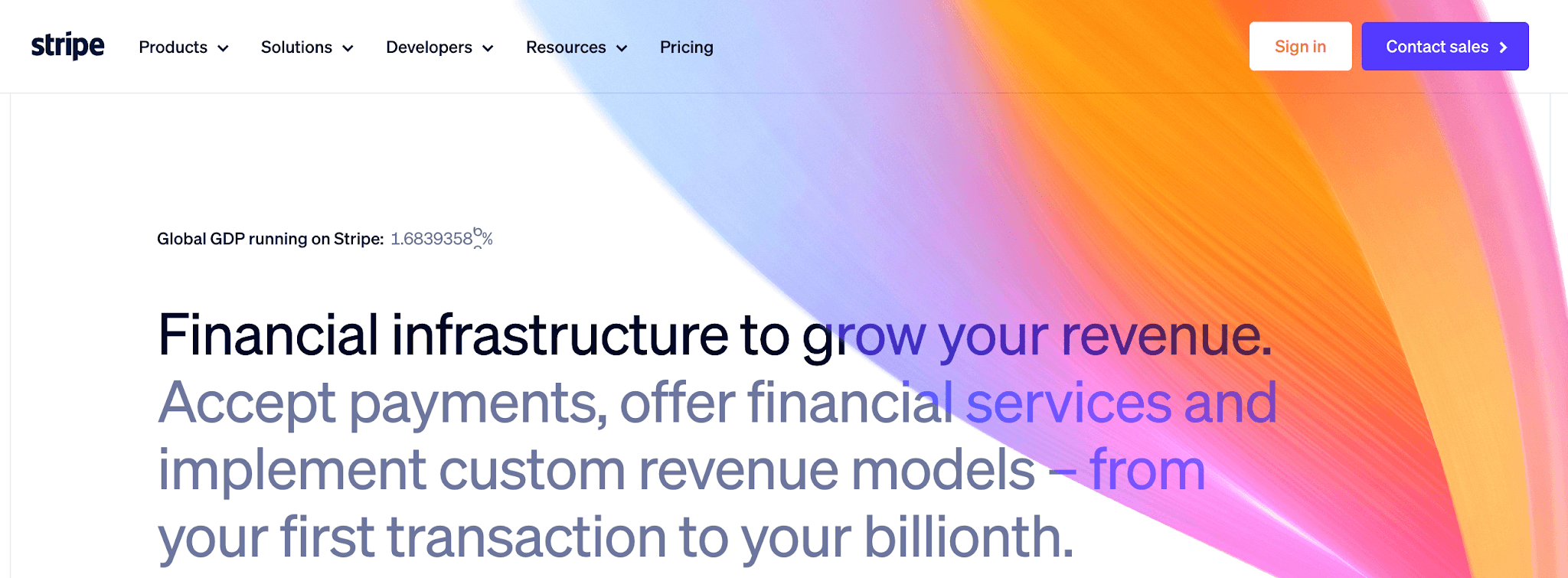
What it is: Stripe remains one of the strongest options globally for subscription billing, usage-based pricing, and developer-first payment integrations. For SaaS businesses selling to an international customer base, Stripe's tooling around recurring revenue is hard to match.
Fees
4.3% on international card transactions + 2% currency conversion + 18% GST on service fees. Effective cost typically lands at 6% or more.
Razorpay vs Stripe
Razorpay is more India-first in its checkout maturity, while Stripe leads on global subscription and developer tooling.
Factor | Razorpay | Stripe |
Core focus | India-first checkout | Global subscription billing & developer tools |
Fees | Standard gateway fee, plus separate FX markup on international payments (verify current rate) | Percentage plus fixed fee, standard card network rates (verify current India-specific terms) |
Subscription/recurring billing | Available | Strong, industry-leading |
India onboarding | Straightforward | Varies by business model, verify eligibility |
Best suited for | Domestic-first businesses | SaaS businesses billing a global customer base |
Summary
Strong for SaaS businesses billing internationally on a recurring basis. Availability and onboarding requirements for Indian-registered businesses have shifted over time depending on business model and export category, so confirm current eligibility directly with Stripe before assuming it fits your setup.
7. Wise
Best For: Freelancers and marketplace sellers who need low-cost payouts, not a full checkout
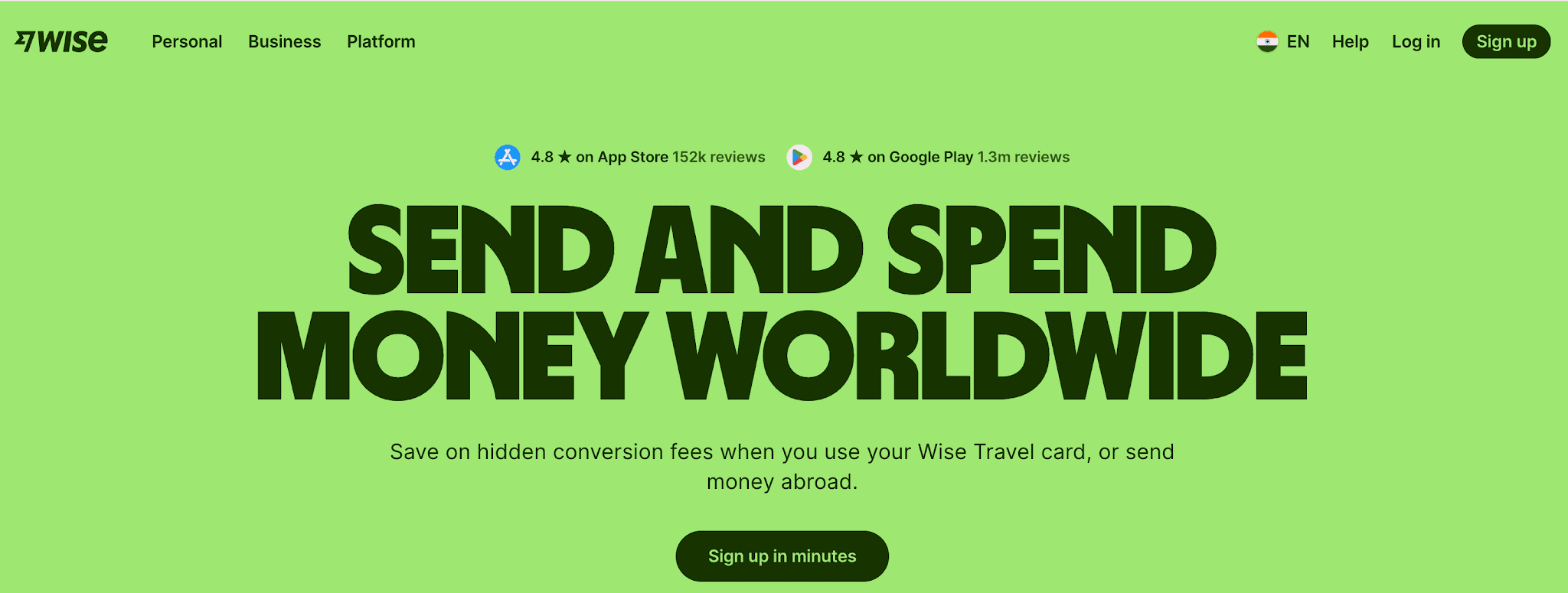
What it is: Wise (formerly TransferWise) is widely used by freelancers and marketplace sellers for its transparent, generally low FX margins compared to traditional banking. It's a strong option specifically for moving money at a fair rate.
Fees
Wise’s cost for Indian users receiving international payments has three layers:
Conversion fee: Approximately 1.65–1.8% of the transferred amount (varies slightly by currency pair and transfer volume)
GST: 18% applied on the conversion fee only, not on the full transfer amount
There is no hidden FX markup on top of this. Wise uses the mid-market exchange rate. The conversion fee is where the cost lives, and it scales with invoice size.
Razorpay vs Wise
Razorpay is a checkout gateway; Wise is not. They solve different problems: Razorpay collects payments from customers, and Wise moves and converts money you've already been paid.
Factor | Razorpay | Wise |
Core focus | Accepting payments from customers | Converting and moving money already received |
Fees | Standard gateway fee, plus separate FX markup on international payments (verify current rate) | Transparent, usage-based FX margin, generally lower than banks (verify current rate) |
Checkout gateway | Yes | No |
Best suited for | Businesses needing a checkout flow | Freelancers/marketplace sellers needing low-cost payouts |
Summary
A strong companion tool for low-cost currency conversion and payouts. It doesn't replace Razorpay for accepting payments directly on a website or app.
Razorpay Alternatives for Domestic Payments
8. Cashfree Payments
Best For: Indian businesses that want a modern, developer-friendly domestic gateway
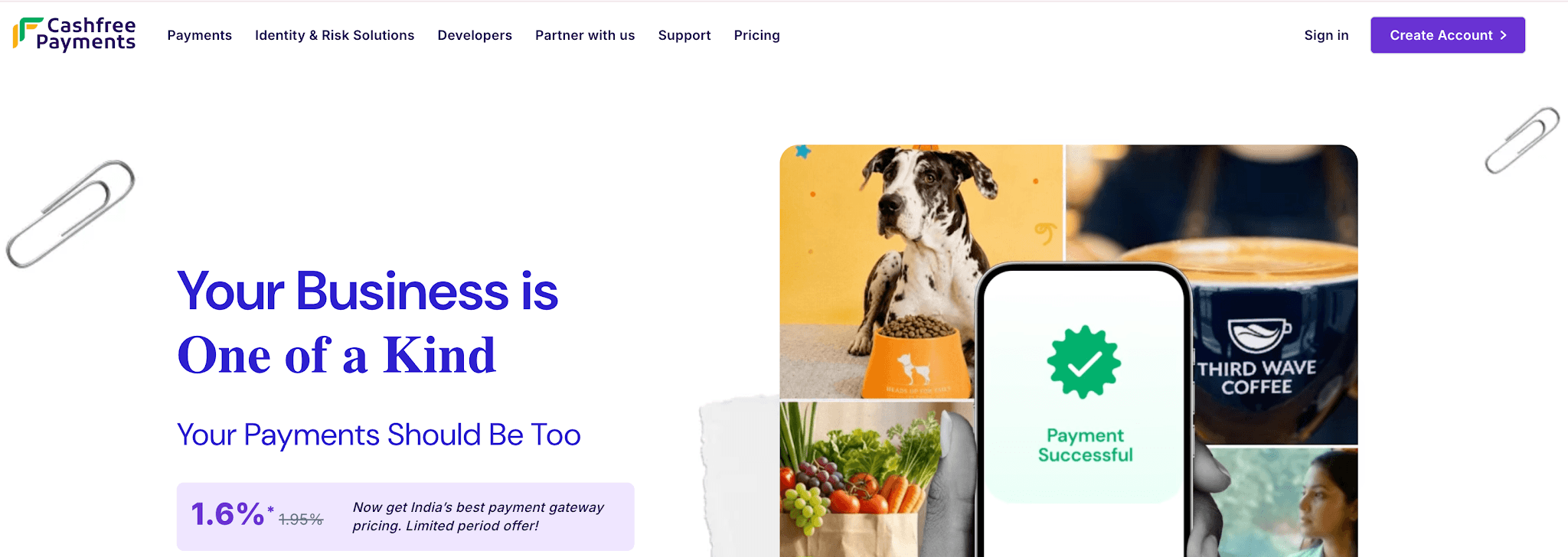
What it is: Cashfree has built a strong reputation among Indian e-commerce, D2C, and SaaS businesses for its developer-friendly APIs, UPI support, and payout capabilities. Integration tends to be quick for teams with in-house development resources, and the platform covers most common Indian payment methods.
Fees
Percentage-based per transaction, plan-dependent.
Razorpay vs Cashfree
Both are strong domestic gateways with broadly similar core capabilities. The comparison usually comes down to specific API preferences and plugin support for your tech stack.
Factor | Razorpay | Cashfree Payments |
Core focus | Broad domestic gateway | Developer-friendly domestic gateway, strong UPI |
Fees | Standard percentage-based gateway fee, plan-dependent (verify current rate) | Percentage-based per transaction, plan-dependent (verify current rate) |
Developer experience | Mature, widely documented | Known for clean, modern APIs |
Export-specific tools | Available | Fewer, not the core focus |
Best suited for | Businesses wanting an established all-rounder | E-commerce, D2C, SaaS wanting fast API integration |
Summary
A solid alternative for businesses prioritising developer experience and UPI depth. Fewer export-specific tools compared to platforms built around cross-border collections.
9. PayU
Best For: Established e-commerce and enterprise businesses needing a mature domestic stack
What it is: PayU is one of the more established names in Indian payment processing, with a mature infrastructure that suits businesses running high transaction volumes, including larger e-commerce operations and enterprise merchants that need reliability at scale.
Fees
Percentage-based per transaction, enterprise plans available.
Razorpay vs PayU
Razorpay tends to feel lighter and quicker to onboard with for smaller businesses. PayU's infrastructure is built with larger, high-volume merchants in mind.
Factor | Razorpay | PayU |
Core focus | Broad, agile domestic gateway | Enterprise-grade domestic infrastructure |
Fees | Standard percentage-based gateway fee, plan-dependent (verify current rate) | Percentage-based per transaction, enterprise plans available (verify current rate) |
Onboarding | Quicker, lighter-weight | Can be heavier, built for scale |
Ideal transaction volume | Small to large | High-volume, enterprise |
Best suited for | Startups and growing businesses | Established e-commerce and enterprise merchants |
Summary
Well suited to high-volume, established businesses that value infrastructure maturity. Can feel heavier for small businesses that just need a simple checkout.
10. CCAvenue
Best For: Traditional businesses that want broad payment method coverage
What it is: CCAvenue has been active in the Indian market for a long time and supports a broad range of payment methods. It's often considered by more traditional businesses that value method coverage over the newer, more streamlined interfaces of recent entrants.
Fees
Percentage-based per transaction, varies by method.
Razorpay vs CCAvenue
Razorpay generally offers a more modern developer and merchant dashboard experience. CCAvenue's strength is longevity and broad method coverage.
Factor | Razorpay | CCAvenue |
Core focus | Modern gateway experience | Long-running, broad method coverage |
Fees | Standard percentage-based gateway fee, plan-dependent (verify current rate) | Percentage-based per transaction, varies by method (verify current rate) |
Interface | Modern dashboard | Feels dated to some users |
Payment method range | Wide | Very wide, long-standing coverage |
Best suited for | Businesses wanting a modern interface | Traditional businesses valuing stability and range |
Summary
Worth considering for businesses that want maximum payment method coverage. The interface feels dated to some users compared to newer entrants.
11. PhonePe Payment Gateway

Best For: UPI-heavy checkout for consumer-facing Indian businesses
What it is: Given PhonePe's dominance in UPI transactions across India, its payment gateway is a natural fit for consumer-facing businesses where UPI is the primary checkout method. Familiarity with the PhonePe app can also reduce checkout drop-off for price-sensitive, UPI-first customers.
Fees
Percentage-based per transaction, UPI-specific rates may apply.
Razorpay vs PhonePe Payment Gateway
Razorpay supports UPI well but isn't tied to a single consumer app ecosystem the way PhonePe's gateway is.
Factor | Razorpay | PhonePe Payment Gateway |
Core focus | Broad domestic gateway | UPI-heavy, consumer-facing checkout |
Fees | Standard percentage-based gateway fee, plan-dependent (verify current rate) | Percentage-based per transaction, UPI-specific rates may apply (verify current rate) |
Ecosystem tie-in | Ecosystem-neutral | Tied to PhonePe app familiarity |
International payments | Available | Not a focus |
Best suited for | Multi-method Indian businesses | Consumer-facing, UPI-first businesses |
Summary
A strong pick for UPI-first, consumer-facing businesses. Less suited to businesses needing global collections alongside domestic checkout.
12. Paytm Payment Gateway
Best For: Businesses leaning on Paytm's existing consumer base
What it is: Paytm's gateway benefits from its existing ecosystem and user base, particularly for businesses whose customers already use Paytm regularly for other payments or wallet balances.
Fees
Percentage-based per transaction, plan-dependent.
Razorpay vs Paytm Payment Gateway
Razorpay is ecosystem-neutral by design, while Paytm's gateway carries an inherent advantage where customers are already active within the Paytm app and wallet ecosystem.
Factor | Razorpay | Paytm Payment Gateway |
Core focus | Broad domestic gateway | Ecosystem-driven checkout |
Fees | Standard percentage-based gateway fee, plan-dependent (verify current rate) | Percentage-based per transaction, plan-dependent (verify current rate) |
Ecosystem tie-in | Neutral | Tied to Paytm app/wallet familiarity |
Best suited for | Multi-method Indian businesses | Businesses with a Paytm-heavy customer base |
Summary
Makes sense for businesses with a Paytm-heavy customer base. The ecosystem advantage is fairly specific and may not matter for every audience.
13. Easebuzz

Best For: SMEs, education platforms, and simple collection workflows
What it is: Easebuzz is commonly used by SMEs, schools, and educational platforms for straightforward fee and payment collection. It's less focused on enterprise-scale features and more on making basic collection workflows simple to set up.
Fees
Percentage-based per transaction, generally positioned as SME-friendly.
Razorpay vs Easebuzz
Razorpay covers a broader range of use cases and scales further for larger businesses. Easebuzz keeps things intentionally simple.
Factor | Razorpay | Easebuzz |
Core focus | Broad, scalable domestic gateway | Simple SME/education-focused collection |
Fees | Standard percentage-based gateway fee, plan-dependent (verify current rate) | Percentage-based per transaction, generally SME-friendly (verify current rate) |
Feature depth | Wide, enterprise-capable | Intentionally limited, low-complexity |
Setup effort | Moderate | Low |
Best suited for | Businesses needing scale and range | SMEs, schools, simple fee collection |
Summary
A good fit for SMEs and education platforms that want simple setup over enterprise depth. Limited enterprise-scale features compared to larger gateway providers.
Razorpay Alternatives Fee Comparison Framework
Use this framework to compare rather than relying on any single published number without verification:
Tool | Fee Type | FX Markup | Fixed / Platform Fees | Settlement & Admin Notes |
Infinity | Flat, all-inclusive | Verify current published rate | Minimal beyond flat fee | Free FIRA; confirm current settlement timelines |
Skydo | Flat/percentage | Verify current published rate | Minimal | Confirm documentation turnaround |
PayPal | Percentage + fixed | Typically higher than dedicated FX tools | Withdrawal fees apply | Confirm current India withdrawal terms |
Stripe | Percentage + fixed | Standard card network rates | Subscription tooling included | Confirm current India eligibility |
Cashfree | Percentage per transaction | Not applicable (domestic) | Setup/plan-dependent | Confirm current settlement cycle |
Razorpay Replacement Decision Matrix
Business Type | Main Pain Point | Recommended Options | Reason |
Freelancer with overseas clients | High FX cost, slow FIRC | Infinity, Wise | Built around transparent cross-border collections |
Export-focused agency | Documentation delays | Infinity, Skydo, Xflow | Faster FIRA/FIRC support |
SaaS business (global customers) | Subscription billing | Stripe, Infinity | Strong recurring billing tools or FX transparency |
D2C / e-commerce brand | Domestic checkout, UPI | Cashfree, PhonePe Payment Gateway | Strong UPI and card checkout coverage |
Enterprise, high transaction volume | Routing reliability | Juspay, PayU | Orchestration and mature infrastructure |
SME or education platform | Simple fee collection | Easebuzz, CCAvenue | Low-complexity setup |
Occasional international client | Client trust, ease of payment | PayPal, Payoneer | Recognition reduces payment friction |
When You Should Not Switch From Razorpay
Switching payment providers is operationally disruptive, so it's worth pausing before making the move.
1) Your payment flows are already approved, stable, and low-dispute.
If your current payment setup is reliable and disputes are rare, then you should not switch from your current payment platform.
2)You depend on specific Razorpay products that an alternative doesn't match.
If you rely on a particular Razorpay feature that is integrated deeply into your checkout or backend, then replacing it might require further engineering setup.
3) Your main need is domestic UPI/card checkout, and your current fees or support are acceptable.
Not every business is chasing cross-border payments or specialised workflows. If your usage is simple and it's working, there may be no problem to solve.
Migration Checklist: How To Compare Razorpay Alternatives
Before switching from Razorpay, you must check these factors rather than just price alone:
Payment methods supported: Confirm if the alternative covers what your customers actually use, such as UPI, cards, netbanking, wallets, international bank transfer, and subscriptions.
Total cost: Do not just look at the headline cost alone. Add up gateway fee, FX markup, platform fee, withdrawal fee, GST, and chargeback cost.
Settlement timelines and hold policies: Ask specifically how holds are triggered and for how long disputed funds can be frozen.
Export documentation and compliance support: For exporters, confirm how FIRA/FIRC is issued, how long it takes, and whether it's free or paid.
Developer integration and plugin availability: Check whether your existing tech stack (Shopify, WooCommerce, custom backend) has ready plugins or requires custom development.
Refunds, disputes, chargebacks, and risk controls: Understand exactly how disputes are handled and who bears the cost during investigation.
Razorpay vs Alternatives: Which One Should You Choose?
There isn't one universal "best" alternative; the right choice depends on which specific problem you're solving.
Choose Razorpay if you mainly need a mature, India-first checkout stack. Razorpay is suitable if your onboarding, support, and settlement experience is already stable. Switching for a marginal cost saving does not make sense if things are already working in your favour.
Choose Infinity if your core pain point is receiving money from international clients. Infinity is built specifically around cross-border collections, FX transparency, and export documentation, rather than domestic checkout.
Choose Cashfree, PayU, CCAvenue, or Easebuzz if you need a straightforward domestic gateway replacement. It includes everything from better developer tooling, broader payment method support, and SME-friendly collection workflows.
Choose PayPal or Payoneer if client familiarity or marketplace payout support matters more to your business than minimising FX cost. This is common for freelancers who take on international clients occasionally rather than as their primary revenue stream.


