

Global payments

Subscribe to our newsletter
Get the latest updates, insights, and tips delivered straight to your inbox.
TL;DR
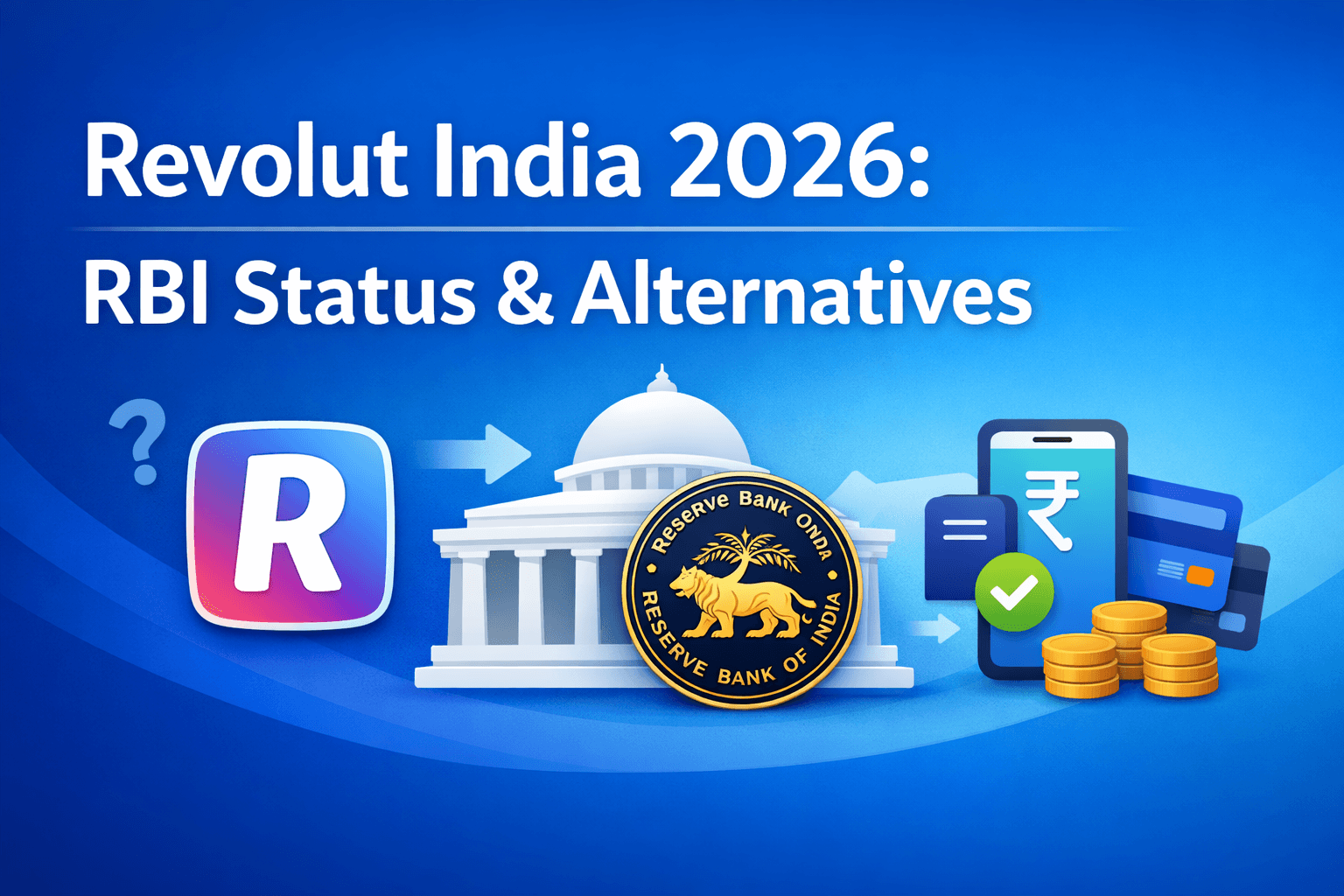
Revolut is not fully operational for Indian residents as a licensed banking or payments platform under Indian regulatory frameworks.
Revolut is a well-known fintech company that offers affordable foreign exchange services and multi-currency accounts in a number of nations, its accessibility in India is still restricted.
According to RBI regulations, Indian residents are generally unable to open a fully functional Revolut account for domestic banking purposes. Even when money is moved to India from a Revolut account situated outside, it is normally done through the traditional SWIFT rails, which may involve compliance checks, FX markups, and middleman fees.
Currently, RBI-compliant systems like Infinity provide a more realistic solution for freelancers, exporters, SaaS entrepreneurs, and multinational enterprises in India looking to receive international payments easily.
Why “Revolut India” is Trending?
India has seen a sharp increase in cross-border companies in recent years. SaaS entrepreneurs receive subscription revenue worldwide, exporters handle payments in several currencies, freelancers bill customers in USD and others, and UK agencies pay Indian coders in GBP and other currencies.
Indian professionals are searching for cutting-edge fintech solutions that provide multi-currency accounts, cheap exchange rates, and easy international transfers as the world economy grows increasingly interrelated. This is the major reason of interest in Revolut India.
In Europe and the UK, Revolut has established a solid reputation as a digital banking substitute that provides inexpensive currency exchange, international debit cards, and feature-rich business accounts. Indian users typically want to know:
Is Revolut available in India?
Can I open a Revolut account in India?
Does Revolut have RBI approval?
Can I transfer money from Revolut to India?
Let’s explore these questions in detail.
What is Revolut?
In 2015, the UK-based finance startup Revolut was established. It began as a digital-first substitute for traditional banks, providing international spending without high markup fees and currency exchange at interbank prices.
Revolut's services have grown over time, including the following:
Multi-currency accounts
International debit cards
Business accounts
Stock and crypto trading (in select markets)
Budgeting and expense tools
Revolut operates in a number of markets, including the US (limited services), the UK, and the European Economic Area. Because it offers banking-like services via an app without conventional physical branches, it is often categorised as a "neobank."
Its simplicity, cost transparency, and worldwide usage are what make it appealing. But entering nations like India requires negotiating a very different regulatory landscape.
Is Revolut Available in India in 2026?
According to the Reserve Bank of India (RBI), Revolut is not yet completely functioning as a licensed bank or regulated financial institution for Indian citizens as of 2026.
India's financial institutions must follow rigorous licensing criteria, which include:
Deposit accounts
Payment services
Foreign exchange transactions
Cross-border remittances
To operate in India, a company must receive the necessary approvals such as:
Banking license
NBFC license
Payment Aggregator license
Authorised Dealer (AD) license for forex
Revolut currently does not operate as a fully licensed retail bank for Indian residents in India's domestic financial ecosystem.
This means:
Indian residents typically cannot open a standard Revolut account as a domestic banking alternative.
Revolut does not function as an RBI-regulated Indian bank.
It does not issue Indian INR accounts under Indian banking regulations.
This is why searches like “Is Revolut available in India?” continue to trend.
Why Revolut’s Entry Into India Is Complex
RBI Regulations & Licensing Requirements
The financial system in India is strictly regulated. The Reserve Bank of India's regulations must be followed by any business that deals with foreign currency. These consist of regulations pertaining to customer protection, data localisation, reporting standards, and capital needs.
India needs formal approvals, in contrast to many European nations where fintech expansion is more straightforward. For instance, there are substantial compliance requirements to obtain an Authorised Dealer license for FX trading.
FEMA & Cross-Border Compliance
The Foreign Exchange Management Act (FEMA) governs cross-border financial transactions in India. Inflows and outflows must be accurately reported, recorded, and classified in accordance with FEMA regulations.
When exporters get foreign exchange payments, they have to make sure they have the right paperwork, including Foreign Inward Remittance Advices (FIRAs) or similar records. These compliance criteria must be incorporated into the framework of every fintech company doing business in India.
Data Localisation & KYC Norms
Strong KYC verification and, frequently, local financial data storage are required by Indian regulators. This makes it more difficult for international fintech firms to access the Indian market.
When taken as a whole, these elements make Revolut India's launch more complicated than a straightforward market growth.
Can Indians Currently Use Revolut?
The response depends upon context and place of residence.
Revolut is typically not available to Indian citizens residing in India as a local banking option. But:
NRIs who live overseas may create and manage Revolut accounts in the nations where it has a licence.
Indian tourists visiting nations where Revolut is active may utilise accounts they made abroad.
Revolut, a locally regulated banking service governed by the RBI, is not a reliable option for Indian businesses.
Relying exclusively on Revolut can lead to compliance concerns for Indian residents who earn money abroad.

Can I Transfer Money from Revolut to My Bank Account in India?
Technically, yes, you can transfer money from Revolut to your bank account in India, but with limitations.
The SWIFT network is usually used when someone from abroad transfers money from a Revolut account to an Indian bank account. This implies:
The sender converts currency within Revolut.
The transfer is routed via correspondent banks.
The receiving Indian bank credits the INR amount.
However, several factors apply:
First, foreign exchange conversion can take place at the receiving bank or at the sending stage. The time and intermediary banks can affect exchange rates.
Second, before money reaches your account, intermediary bank fees could be deducted.
Third, paperwork may be needed for compliance checks conducted by Indian banks, particularly for transactions pertaining to business.
Therefore, even though it is feasible to send money from Revolut to India, doing so does not remove the typical regulatory difficulties associated with cross-border payments under Indian law.
Why Infinity Is the Best Alternative to Revolut for Receiving International Payments?
Along with an internationally recognised worldwide brand name, regulatory clarity, compliance support, and ideal foreign exchange conversion within India's financial system are top priorities for Indian professionals and organisations.
Indian cross-border earners are the target market for Infinity. By offering free and automatic FIRA, it complies with Indian documentation standards, facilitates more seamless and 24-hour INR settlements, and streamlines the process of receiving foreign payments without regulatory concern.
Selecting an Indian-specific solution might have a big impact if your objective is to efficiently handle international payments while adhering to Indian laws.
Revolut vs Infinity: A Detailed Comparison for Indian Businesses
The main difference between Revolut India and Infinity can be seen in their target market and regulatory positioning.
Availability in India
For Indian citizens, Revolut does not now offer domestic banking services regulated by the RBI. In contrast, Infinity is designed especially for Indian exporters, freelancers, and companies that accept international payments.
RBI Compliance
Revolut does not function as a regulated Indian banking organisation; instead, it operates under international regulatory frameworks. Infinity ensures easier documentation and reporting alignment by being designed with Indian compliance needs in mind.
FX Markup & Costs
Revolut's competitive foreign exchange rates are well-known throughout the world. SWIFT costs and local banking conversion fees, however, can still be applicable once the money enters India.
By not imposing an FX markup on Indian users, Infinity aims to optimise FX conversion. This lowers unnecessary intermediate expenses.
INR Settlement Speed
Revolut transfers to India are subject to correspondent banks and SWIFT timelines. With fewer difficulties, Infinity aims to simplify INR settlement for Indian accounts by providing 24-hour settlement.
Documentation & Compliance
For GST and accounting purposes, Indian freelancers and exporters frequently need standardised documentation like FIRA. Infinity streamlines compliance paperwork in accordance with Indian financial standards.
Conclusion
A broader shift in India's digital economy is reflected in the interest in Revolut India. Better solutions for handling foreign payments, currency conversion, and worldwide banking are needed by freelancers, SaaS entrepreneurs, agencies, and exporters.
Revolut isn't entirely accessible to Indian citizens as an RBI-regulated banking option as of 2026, though. Although money can theoretically be sent from Revolut to India over SWIFT, there are still typical banking layers and compliance considerations involved.
FAQs around Revolut India
1. Is Revolut available in India?
No, Revolut is not fully available as an RBI-regulated banking solution for Indian residents as of 2026.
2. Does Revolut have RBI approval?
Revolut does not operate as a licensed Indian bank under the Reserve Bank of India for domestic retail banking services.
3. Can Indian residents open a Revolut account?
Indian residents living in India generally cannot open a fully functional Revolut account as a domestic banking alternative.
4. Is Revolut legal in India?
Revolut itself is a legal global fintech company. However, it does not operate as a regulated Indian banking institution for resident users.
5. Can Indian freelancers use Revolut?
Indian freelancers cannot depend on Revolut as a locally regulated banking platform, even if they may receive money from Revolut accounts located abroad.
6. Is it possible for me to move funds from Revolut to my Indian bank account?
Yes, funds can be moved from Revolut to an Indian bank account using SWIFT. However, there may be compliance checks, FX conversion costs, and intermediary bank fees.
7. What is Revolut's best substitute in India?
Infinity is currently a more workable option made for the Indian regulatory environment for Indian exporters, freelancers, and SaaS founders looking for compliant foreign payment options.


